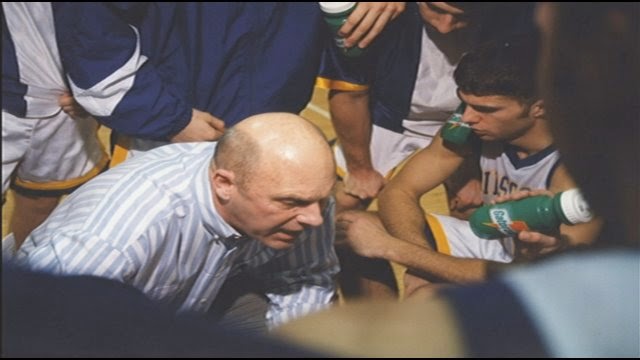
“I learned something from Tony La Russa a long time ago. He said he tried to get his back-ups, his subs, a game a week, whether an inning here on Monday or an inning on Tuesday. You know what? The same thing applies to basketball. You know when you get guys minutes, quality minutes in the duration of the season, when they get in pressure situations, it doesn’t feel like pressure."
Showing posts with label Game Strategy. Show all posts
Thursday, March 24, 2016
TOM CREAN UTILIZES TONY LA RUSSA'S SUBSTITUTION SYSTEM
Turns out that Indiana and Coach Tom Crean took a page from baseball's Tony La Russa in utilizing your bench to prepare them for the post season.
Labels:
Game Strategy
Wednesday, October 28, 2015
THOUGHTS FROM TOM THIBODEAU (PART II)
Another assist to my guy Steve Finamore -- passionate about learning and sharing. By the way, Steve is a great follow on Twitter. To follow is Part II of some thoughts and quotes via Tom Thibodeau that Steve has collected:
“We’re excited. Whenever they
tell us to play, we’ve got to be ready. There are no off nights in the NBA.
That’s the one thing. Even being here, when you see all the great talent that
we have in our league, if you take someone lightly, you’re making a big mistake
and we can’t just talk about it. We’ve got to put the work into it because
there’s a lot of work and commitment that goes into winning. To say that we’re
going to win because we feel we’re talented—doesn’t work that way. There’s a
lot of talent in this league. It’s the teams that are willing to make that
commitment and endure throughout during the course of the season, to work hard
all summer, to work hard in training camp, to work hard throughout the season,
to commit to playing for each other, those are the teams that build winning
habits and that’s what we have to do. We have to build winning habits
throughout the course of the year.”
***
On His memory From
the 2013-14 Season/Team:
“How they wouldn’t quit. When
I look at the team, we took a couple of big hits the last couple of years,
actually the last three years. They fought like crazy that year. These guys,
they fought like crazy to make sure we had a good season. When a team commits
to playing as a team, playing together and playing for one another, they give
you everything they have, there’s nothing more you can ask for. I think other
people would have just laid down and we didn’t do that.’’
***
“Five-man offense, five-man
defense, and everyone is connected. If one guy is not doing their job, it’s
going to make everyone look bad. We have to be tied together.”
***
“We’re not changing. We’re
trying to win games. We’re not changing our approach. Every game, analyze what
we’re doing well, what we’re doing not as well as we would like, make our
corrections, move on to the next one, know the opponent well, keep moving
forward. That’s all we can do.”
***
“Rah-rah is good, but it’s
more the effort plays that matter. I thought our guys showed a lot of
toughness. Our guys have the will to continue to fight.”
***
“I don’t see any negative
from practicing hard. I don’t see any negative from playing hard. You’re
building habits every time you step out there. I think you’ve got to develop a
physical toughness and a mental toughness along the way. Because down the road
when you do get there, there’s going to be a lot of fire that you’ve got to go
through. And you’ve got to be prepared to deal with it.”
***
“There’s not a lot of
difference between the elite teams. It’s will, determination. That’s not
something you develop once you get there. You’d better develop it all along the
way.”
***
On What a Team Can
Take From a Loss:
”Study, learn, correct and
grow.”
***
“To me, it’s preparation.
You’re guarding a great shooter and you’re going under on a screen — it doesn’t
make any sense to me. Or you’re just whacking at a guy after he’s already
buried you in the paint. To me, that makes no sense. That makes no sense. You
got to play this game with energy and toughness, and intelligence. And you got
to get yourself ready, and you’re on the road. You have to have a mentality.
This is business. This ain’t hanging out having a good time. If you’re serious
about winning you prepare yourself the right way.”
***
On Joakim Noah:
“There are not many players
like him. His all-around defense, every aspect, the rebounding effort, to
seeing things early (and) how they’re developing. It’s just great
effort. But the most important thing is his ability to make two, three or
four efforts on the same play. Oftentimes I don’t know how he gets to the ball.
It’s just great effort. I think when you see those types of things, that helps
unite and inspire your team.”
***
“I’m going with the guys who
I think give us the best chance to win, I don’t care who they are. So when we
hit that six-minute mark it’s based on what we’re doing and what we need, and
that’s the way it’s going to be.”
***
“We have good guys. Sometimes
when things aren’t going your way there’s a tendency when you’re trying to get
out of a hole to try to do more yourself. And that’s what you have to (fight).
You have to do more together. Not more yourself. So while the intentions are
good, sometimes they’re misguided. So if we try to go too much one on one we’re
not going to have success like that … we can’t be fragmented. We have to be
together. Through the good, the bad, and just keep fighting. We have to fight
the good fight every night. We can’t sideways and that’s a big part of this
league.”
Monday, October 26, 2015
THOUGHTS FROM TOM THIBODEAU (PART I)
Another assist to my guy Steve Finamore -- passionate about learning and sharing. By the way, Steve is a great follow on Twitter. To follow is Part I of some thoughts and quotes via Tom Thibodeau that Steve has collected:
Taj Gibson on Coach Thibodeau:
“If you want to be coached
& pushed, he’s the coach for you. If you don’t want to get better, this
isn’t the team for you.”
***
“You want to be a
championship team, there’s a price to pay. And that’s what you have to do. There
are no shortcuts. You can’t shortcut your way to success. I’m going to give
everything I have each and every day, and I have no regrets.”
***
‘‘On the first day of camp,
if you went to all 30 teams, everyone would say, ‘Yeah, we want to win a
championship.’ Very few teams are willing to make that commitment over a long
period of time in putting the necessary work into it each and every day. It’s
easy to say it; it’s harder to do it.
***
“We’re asking everyone to
sacrifice and put the team first, so we have quality depth. Some night’s
guys will play a little more than others, but they’re all sharing and they’re
all going to have to sacrifice, and that’s what’s important for our
team. As you wind down, it’s situational. A lot of it is what’s going on
in the game: Do you have a lead? Are you trying to protect the lead? Do you
need more scoring? Hopefully you have that answer on the bench. The big
thing is everyone is sacrificing for the team. You have to put the team first.
Whatever gives us our best chance of winning, that’s what we’re going to do.”
***
“You have a pretty good idea
of who you’re going to finish with. But that can change if guys are performing
well. The big thing is it’s not an individual thing. It’s how the group is
performing. We look at everything.”
***
“Trust is work. That’s how
you build trust. You got to know what you’re doing. You have to be tied
together. You have to work at it. Where you get trust is from the work. The
magic is in the work. It’s working together. It’s timing. It’s being tied
together. One guy being off is going to hurt. You need everyone working
together. And it doesn’t end. You’re not going to have it figured out in three
days. You’re trying to do something great. Nothing great was ever achieved
without great work and great ethic. It’s really that simple.’’
***
"People always talk
about going on offensive runs. But you can go on defensive runs too."
***
“I’m watching San Antonio,
and they’re going after it. Parker, Duncan, they’re playing huge minutes right
off the start. I think it’s a strong message what they’re saying right now.
They’re preparing themselves to defend their championship. And so in order to
get that way from them, you’re going to have to wrestle it away from them.
They’re not just going to give it away. Your mind-set has to be right.’’
***
“Your mindset has to be
right. They say Duncan never leaves the gym. When you look at great players,
when you read about guys who have achieved something great, it’s usually them
getting past adversity, them making great effort – their readiness to accept a
challenge. I think you need a great commitment from your team if you want to do
something special. That commitment has to start at the beginning, and it has to
remain throughout.”
***
“Whatever it is that you’re
facing, you’ve got to be ready to accept that challenge and be ready to play.”
Sunday, June 14, 2015
KERR'S LISTENING SHOWS TWO LEADERSHIP LESSONS
A column by Monte Poole for csnbayarea.com showed two great leadership messages from the Golden State Warriors Steven Kerr. You can read Poole's entire column here, but this is what made an impression on me in regard to Kerr.:
With his team losing two straight games to fall into a must-win situation, Warriors head coach Steve Kerr on Thursday heeded the advice of a trusted member of his staff to put the club back on track in the NBA Finals.
The advice came not from veteran assistants Alvin Gentry and Ron Adams, nor did it come from young assistant Luke Walton. It did not come from player development coaches Jarron Collins and Bruce Fraser.
No, the advice came from further down the organization chart, from video-scouting specialist Nick U’Ren.
He suggested that Kerr change his starting lineup, replacing 7-foot center Andrew Bogut with 6-7 forward Andre Iguodala, who hadn’t started a game all season.
“It was his idea,” Kerr said of U’Ren. “He brought it to us this morning. We had debated some other things the other night after Game 3, but you always want to let these things simmer before you make a decision.
The first lesson in leadership is to utilize all the resources available. You have to respect the fact that Kerr listened to his video-scouting specialist and obviously listened emphatically.
The second lesson in leadership is that Kerr didn't hesitate to give credit where credit was due. This makes an incredible healthy working environment for those in the organization.
With his team losing two straight games to fall into a must-win situation, Warriors head coach Steve Kerr on Thursday heeded the advice of a trusted member of his staff to put the club back on track in the NBA Finals.
The advice came not from veteran assistants Alvin Gentry and Ron Adams, nor did it come from young assistant Luke Walton. It did not come from player development coaches Jarron Collins and Bruce Fraser.
No, the advice came from further down the organization chart, from video-scouting specialist Nick U’Ren.
He suggested that Kerr change his starting lineup, replacing 7-foot center Andrew Bogut with 6-7 forward Andre Iguodala, who hadn’t started a game all season.
“It was his idea,” Kerr said of U’Ren. “He brought it to us this morning. We had debated some other things the other night after Game 3, but you always want to let these things simmer before you make a decision.
The first lesson in leadership is to utilize all the resources available. You have to respect the fact that Kerr listened to his video-scouting specialist and obviously listened emphatically.
The second lesson in leadership is that Kerr didn't hesitate to give credit where credit was due. This makes an incredible healthy working environment for those in the organization.
Labels:
Communication,
Game Strategy,
Leadership
Tuesday, March 31, 2015
OWNING THE TIMEOUT
When Coach Smith spoke, he expected your full attention. Anything less
resulted in a reminder that not paying attention could affect the outcome of a
game.
His behavior during time-outs in close games was a lifetime lesson. Sure, he'd discuss the upcoming sequence of events and what would be required to make them successful, but he always started with a bigger picture. If we were down three points with a minute to play, he’d enter our huddle with a smile. “Isn’t this fun?”
Former UNC player Woody Coley from the book, "The Carolina Way"
His behavior during time-outs in close games was a lifetime lesson. Sure, he'd discuss the upcoming sequence of events and what would be required to make them successful, but he always started with a bigger picture. If we were down three points with a minute to play, he’d enter our huddle with a smile. “Isn’t this fun?”
Former UNC player Woody Coley from the book, "The Carolina Way"
Labels:
Dean Smith,
Game Strategy,
SPECIAL SITUATIONS,
Time Management
Monday, March 2, 2015
PRATICE AND PLAYING TIME THOUGHTS
A couple of article recently on practice and playing time for collegiate basketball players spoke to the different philosophy between minutes at practice and minutes at games. In an article by Chris Carson, it mentioned that some people had criticized Syracuse's Jim Boeheim for the big minutes some of his starters have been playing. Duke's Mike Krzyzewski came to his defense:
Faced with three players dealing with ankle injuries and a fourth recovering from shoulder and rib issues, Krzyzewski was asked if he worried about the minutes piling up on his players.
"Not minutes, it's injuries," Krzyzewski said. "Kids don't get tired from playing minutes. They get tired from over-practice. There's no kid in the world who gets tired from playing. You've got to be kidding me. You get tired if you play long minutes and then you practice long. None of those kids want to come out. That doesn't tire them out. It's how you practice."
Like Syracuse, Duke has just eight healthy scholarship players. But despite having more quality depth than the Orange, Krzyzewski paid little heed to the concept of a "freshman wall."
Krzyzewski played freshman Justise Winslow for 40 minutes against the Orange on Saturday and freshman point guard Tyus Jones for 38. Duke guard Quinn Cook is among the top five in minutes played in the ACC this year.
"Our practice is amazingly short and no contact," Krzyzewski said. "They've been interesting, let's put it that way. We don't tire them out. You worry about being in shape and how you run without contact or change surfaces and stuff like that. They all want to play 40 minutes."
In another article, by Mike Waters, he details Notre Dame's Mike Brey as to how he controls practice time while also allowing big minutes for key starters:
"The older guys know how to play 40 minutes,'' Brey said of his veterans. "They can fight through the fatigue mentally way better than a younger player. If it's younger guys, you can have an issue in game and length of season. Connaughton and Grant? They're men.''
Brey said he prefers to play with a shorter bench, giving more minutes to his top-line guys.
"I think it can help you,'' Brey said of a short rotation. "I think it helps your offensive efficiency. Guys know they're going to play. They'll move the ball. They're patient. When you play a lot of different guys, you get a lot of different guys playing together and they're more apt to turn the ball over. Also, nobody's looking over at the bench expecting to get the hook.''
Brey said he prepares his players to play more minutes from the time practice starts in the fall.
"In our practices, we get to 5-on-5 quick,'' Brey said. "We're 5-on-5 in that October to November stretch. They're getting their playing legs because we're playing in practice early in the season.
"You also have to start shortening your practices earlier than you'd think,'' the Notre Dame coach added. "You have to understand the value of rest days in November and December.''
By this time of year, Notre Dame's practices are practically walk-throughs compared to other schools.
"I haven't been on the floor more than an hour and 15 minutes since January 1,'' Brey said.
On Thursday, the day after Notre Dame's win over Duke, Brey said his team would not have a regular practice.
"These are what we call recovery days,'' Brey said. "We'll watch a little film of us, a little film of Pittsburgh, we'll let them stretch, they'll get a lift in, but no practice.''
Notre Dame's players also get massages regularly and have a chiropractor available as well.
Faced with three players dealing with ankle injuries and a fourth recovering from shoulder and rib issues, Krzyzewski was asked if he worried about the minutes piling up on his players.
"Not minutes, it's injuries," Krzyzewski said. "Kids don't get tired from playing minutes. They get tired from over-practice. There's no kid in the world who gets tired from playing. You've got to be kidding me. You get tired if you play long minutes and then you practice long. None of those kids want to come out. That doesn't tire them out. It's how you practice."
Like Syracuse, Duke has just eight healthy scholarship players. But despite having more quality depth than the Orange, Krzyzewski paid little heed to the concept of a "freshman wall."
Krzyzewski played freshman Justise Winslow for 40 minutes against the Orange on Saturday and freshman point guard Tyus Jones for 38. Duke guard Quinn Cook is among the top five in minutes played in the ACC this year.
"Our practice is amazingly short and no contact," Krzyzewski said. "They've been interesting, let's put it that way. We don't tire them out. You worry about being in shape and how you run without contact or change surfaces and stuff like that. They all want to play 40 minutes."
In another article, by Mike Waters, he details Notre Dame's Mike Brey as to how he controls practice time while also allowing big minutes for key starters:
"The older guys know how to play 40 minutes,'' Brey said of his veterans. "They can fight through the fatigue mentally way better than a younger player. If it's younger guys, you can have an issue in game and length of season. Connaughton and Grant? They're men.''
Brey said he prefers to play with a shorter bench, giving more minutes to his top-line guys.
"I think it can help you,'' Brey said of a short rotation. "I think it helps your offensive efficiency. Guys know they're going to play. They'll move the ball. They're patient. When you play a lot of different guys, you get a lot of different guys playing together and they're more apt to turn the ball over. Also, nobody's looking over at the bench expecting to get the hook.''
Brey said he prepares his players to play more minutes from the time practice starts in the fall.
"In our practices, we get to 5-on-5 quick,'' Brey said. "We're 5-on-5 in that October to November stretch. They're getting their playing legs because we're playing in practice early in the season.
"You also have to start shortening your practices earlier than you'd think,'' the Notre Dame coach added. "You have to understand the value of rest days in November and December.''
By this time of year, Notre Dame's practices are practically walk-throughs compared to other schools.
"I haven't been on the floor more than an hour and 15 minutes since January 1,'' Brey said.
On Thursday, the day after Notre Dame's win over Duke, Brey said his team would not have a regular practice.
"These are what we call recovery days,'' Brey said. "We'll watch a little film of us, a little film of Pittsburgh, we'll let them stretch, they'll get a lift in, but no practice.''
Notre Dame's players also get massages regularly and have a chiropractor available as well.
Labels:
Coach K,
Game Strategy,
practice
Friday, January 30, 2015
DON MEYER: 7 WAYS TO LOSE A GAME
1. Don’t play hard: You can have the most talented team in the world, you can have the most intelligent team in the world, but if your team doesn’t play hard, there is no chance that they will be successful over the course of time. You must, before all else, establish and demand that your players play hard. It must be your identity.
2. Don’t play smart: After establishing that your team plays hard, you must then teach your players how to play smart. They must have a high “basketball I.Q.” Your players must learn and buy into the system that you teach and they must learn technique. At Northern, we say, “You can have all the intensity of a mad dog in a meat house, but without technique, you’ll end up with a bullet between the eyes.” Your players must learn to be students of the game. We stress the importance of player notebooks and taking notes.
3. Don’t play together: Finally, after teaching your players to play hard and smart, your players must then learn how to play together. Your team will have a very difficult time if there isn’t unity among the troops.
Key Phrase = “Play Hard, Play Smart, Play Together.”
4. Don’t have a delay game: If your team is fortunate enough to get a lead late in the game, you must have some type of delay game. While that doesn’t mean that you become passive and are afraid to shoot, that does mean that you may have restrictions such as; the only shot is a wide-open lay-up, minimum number of passes before shooting is 5, etc. Teams that don’t have a delay game have the tendency to lose big games.
5. Have no delay game defense: There will be times when you are losing and the opponent is running a delay game to milk the clock. If and when that is the case, you must have a secondary defense that will force the offense to speed up and hopefully take bad shots, so your team can preserve the clock. That might mean you have a press defense, or a trapping zone defense, but whatever the case, you must find ways to speed up the game and give yourself more possessions and opportunities to score.
6. No comeback game: Your team won’t always have a ten-point lead late in the game. There will undoubtedly be times when your team is going to be losing and your players have to know how to speed up the game to get more possessions and thus, more opportunities to come back. First of all, do you have “quick-hitters” in place; set plays that will result in a good look at the basket in a minimal amount of time? Also, do you have substitution patterns in place to best maximize your talent when you are losing? For example, subbing in the appropriate players on a defensive possession that will give you the best chance to stop the other team, and during dead balls, subbing in shooters on offensive possessions if you need to get 3-pointers to get back in the game. In addition, when your team is shooting a free throw, do you have players ready to check in if the player makes the second free throw, which will stop the clock and set up your defense (a timeout without using a timeout)? Being prepared for situations where your team is losing late in the game and having a plan of action ready is vital to a successful program.
7. Don’t simplify the game: There is a lot of power and truth in the saying, “Simplicity is Complicated.” You must keep the game simple for your players. If they have to think too much, they won’t be able to react. A good quote is “the more they think, the slower their feet get.” A great coach teaches his or her players a few simple principles from which the program is known by, and then, that coach lets the players play the game.
2. Don’t play smart: After establishing that your team plays hard, you must then teach your players how to play smart. They must have a high “basketball I.Q.” Your players must learn and buy into the system that you teach and they must learn technique. At Northern, we say, “You can have all the intensity of a mad dog in a meat house, but without technique, you’ll end up with a bullet between the eyes.” Your players must learn to be students of the game. We stress the importance of player notebooks and taking notes.
3. Don’t play together: Finally, after teaching your players to play hard and smart, your players must then learn how to play together. Your team will have a very difficult time if there isn’t unity among the troops.
Key Phrase = “Play Hard, Play Smart, Play Together.”
4. Don’t have a delay game: If your team is fortunate enough to get a lead late in the game, you must have some type of delay game. While that doesn’t mean that you become passive and are afraid to shoot, that does mean that you may have restrictions such as; the only shot is a wide-open lay-up, minimum number of passes before shooting is 5, etc. Teams that don’t have a delay game have the tendency to lose big games.
5. Have no delay game defense: There will be times when you are losing and the opponent is running a delay game to milk the clock. If and when that is the case, you must have a secondary defense that will force the offense to speed up and hopefully take bad shots, so your team can preserve the clock. That might mean you have a press defense, or a trapping zone defense, but whatever the case, you must find ways to speed up the game and give yourself more possessions and opportunities to score.
6. No comeback game: Your team won’t always have a ten-point lead late in the game. There will undoubtedly be times when your team is going to be losing and your players have to know how to speed up the game to get more possessions and thus, more opportunities to come back. First of all, do you have “quick-hitters” in place; set plays that will result in a good look at the basket in a minimal amount of time? Also, do you have substitution patterns in place to best maximize your talent when you are losing? For example, subbing in the appropriate players on a defensive possession that will give you the best chance to stop the other team, and during dead balls, subbing in shooters on offensive possessions if you need to get 3-pointers to get back in the game. In addition, when your team is shooting a free throw, do you have players ready to check in if the player makes the second free throw, which will stop the clock and set up your defense (a timeout without using a timeout)? Being prepared for situations where your team is losing late in the game and having a plan of action ready is vital to a successful program.
7. Don’t simplify the game: There is a lot of power and truth in the saying, “Simplicity is Complicated.” You must keep the game simple for your players. If they have to think too much, they won’t be able to react. A good quote is “the more they think, the slower their feet get.” A great coach teaches his or her players a few simple principles from which the program is known by, and then, that coach lets the players play the game.
Labels:
Coach Meyer,
Game Strategy,
Teamwork,
Work Ethic
Thursday, January 29, 2015
FOUL FOR PROFIT
The following comes from "Winning Defense" by Del Harris. The absolute best coaches leave nothing to chance. They are extremely intentional in all phases of play. Coach Harris shows thought and strategy in the utilization of the fouls. We work hard to defend without fouling and constantly talk to our team about this through practice and video footage. I love how Coach Harris uses the term "Foul for Profit" -- it gives value to the possession and how you utilize a foul or waste one:
The point is that each player is given a certain number of fouls to use per game. They can be wasted on non-profit items such as reaching/grabbing in the backcourt instead of containing; grabbing or reaching around behind a driver in the front court instead of moving one’s feet; fouling a jump shooter after he has already released the ball; softly touching a layup or postup shooter to give him a good opportunity to score a three-point play, changing in an out-of-control drive, etc.
A player who “fouls for profit” is one who uses his first two or three fouls in the first three quarters of a game to prevent easy scores. He does not allow an easy layup or a put-back on an offensive rebound. He fouls with enough force to guarantee that the “easy basket” is not made.
“Foul
for Profit” Instead of Wasting Fouls
Fouling
is not against the rules, as such. Fouling is included as part of the rules.
Like any rule, whether it is a tax law, civil law, or basketball law, the
smarter individuals will find ways to make the rules work for them to their
most advantageous way.The point is that each player is given a certain number of fouls to use per game. They can be wasted on non-profit items such as reaching/grabbing in the backcourt instead of containing; grabbing or reaching around behind a driver in the front court instead of moving one’s feet; fouling a jump shooter after he has already released the ball; softly touching a layup or postup shooter to give him a good opportunity to score a three-point play, changing in an out-of-control drive, etc.
A player who “fouls for profit” is one who uses his first two or three fouls in the first three quarters of a game to prevent easy scores. He does not allow an easy layup or a put-back on an offensive rebound. He fouls with enough force to guarantee that the “easy basket” is not made.
Sunday, January 11, 2015
BO ON A BACK UP PLAN AND MAKING SURE YOUR TEAM IS IMPROVED AFTER HALFTIME
I've always been a big believe in "Plan B" (and even Plan C & D). You always go into a game with an organized plan of attack but the best coaches are flexible in their preparation and in their game execution. We might want to come out and trap ball screens -- and we will work on it in practice. But if the offense throws us a new wrinkle or if are execution does not give us the pre-conceived results than we are going to hedge, ice or slide thru. And we are going to make sure we work on at least two in practice just in case.
I loved Bo Schembechler's thoughts on this concept as he wrote in "Bo's Lasting Lessons" with John U. Bacon:
They say the first casualty of war is the war plan, and I'd have to agree with that.
I knew more about Woody Hayes than any coach I ever went against, hands down. I played for him, coached for him, I studied him. I knew that guy cold! And every time we played each other, he still did something I didn't expect -- ten straight years! Hot damn! I didn't know he was going to do that!
So that goes to show you, as much time as we spent scouting and preparing and planning -- and I don't think any team in America prepared better for anyone than we did for Ohio State -- the game never went exactly as we thought it would. It just never does.
That's all right. If things aren't going your way, you adjust. Forget your game plan, forget your ego. Get the best information you can, and give your team the best chance to succeed from that point forward. To do anything less is to let your people down when they need you most. And that just inexcusable.
The best time to do this, if you're a football coach, is halftime. When you leave your locker room for the second half, you're not going to be the same team. You're either going to be better informed, or you're going to fall behind because the guys in the other locker room are making better adjustments than you are.
We almost never spent that time on inspirational talks, but on technical adjustments. To make the most out of our time, we followed a strict routine.
I loved Bo Schembechler's thoughts on this concept as he wrote in "Bo's Lasting Lessons" with John U. Bacon:
They say the first casualty of war is the war plan, and I'd have to agree with that.
I knew more about Woody Hayes than any coach I ever went against, hands down. I played for him, coached for him, I studied him. I knew that guy cold! And every time we played each other, he still did something I didn't expect -- ten straight years! Hot damn! I didn't know he was going to do that!
So that goes to show you, as much time as we spent scouting and preparing and planning -- and I don't think any team in America prepared better for anyone than we did for Ohio State -- the game never went exactly as we thought it would. It just never does.
That's all right. If things aren't going your way, you adjust. Forget your game plan, forget your ego. Get the best information you can, and give your team the best chance to succeed from that point forward. To do anything less is to let your people down when they need you most. And that just inexcusable.
The best time to do this, if you're a football coach, is halftime. When you leave your locker room for the second half, you're not going to be the same team. You're either going to be better informed, or you're going to fall behind because the guys in the other locker room are making better adjustments than you are.
We almost never spent that time on inspirational talks, but on technical adjustments. To make the most out of our time, we followed a strict routine.
Labels:
BO SCHEMBECHLER,
Game Strategy,
Teaching
Wednesday, September 10, 2014
COACHES HALF-TIME ORGANIZATION
Do you have a system of organization for how you handle pre-game, halftime, and post game situations? Here is a great list from Coach Mike Dunlap on how he handles halftime game analysis:
COACHES EVALUATION
We are looking at our pattern of play
1. Offense
Positive: 3 things
Negative: 3 things
2. Defense
Positive: 3 things
Negative: 3 things
EVALUATION OF HALFTIME STATS
1. Offensive Categories
Shooting Percentage/Shot Chart
Assist to Turnovers
Rebounding
2. Defensive Categories
Defensive Chart
Rebounding
ADJUSTMENTS
It is important that adjustments are clear and concise so there isn't any confusion and they will be able to remember the adjustments
1. Offense: 3 things
2. Defense: 3 things
COACHES EVALUATION
We are looking at our pattern of play
1. Offense
Positive: 3 things
Negative: 3 things
2. Defense
Positive: 3 things
Negative: 3 things
EVALUATION OF HALFTIME STATS
1. Offensive Categories
Shooting Percentage/Shot Chart
Assist to Turnovers
Rebounding
2. Defensive Categories
Defensive Chart
Rebounding
ADJUSTMENTS
It is important that adjustments are clear and concise so there isn't any confusion and they will be able to remember the adjustments
1. Offense: 3 things
2. Defense: 3 things
Labels:
Game Strategy,
SPECIAL SITUATIONS
Tuesday, July 8, 2014
KNIGHT ON WINNING THE FREE THROW GAME
"In
any game, I always wanted my team to win the team fouls battles, to be the
first to shoot one-and-ones (after the sixth foul on a team each half), and the
first to shoot an automatic two free throws (after the ninth foul each half). I
think that’s one of the most overlooked and most important aspects of a college
game, because it doesn’t just put points on the board but also accumulates
fouls on the individual players who wind up on the bench. Time lost on the
bench by key opponent players was of incalculable value for us (and vice
versa). This was one of the hidden keys to winning that occur in any
competitive endeavor. "
From "The Power of Negative Thinking" by Bob Knight
Labels:
BOB KNIGHT,
Free Throw Shooting,
Game Strategy
Tuesday, July 1, 2014
LATE CLOCK DEFENSE
I have spent a great deal of the summer going over our defensive schemes and looking for ways to improve how we defend. It's included attending clinics, talking with coaches, viewing game film of ours and other teams, watching teaching DVD's and reviewing previous notes I've took and collected. One of the areas I'm looking at is defensive strategies in late clock situations. Here are some good guidelines from Del Harris:
When there are only 10 seconds left on the shot clock, it’s wise to call out a signal such as “clock,” or use a color. Both the offense and the defense should always be aware of how much time is left. An intelligent offense will make adjustments for the final 10 seconds of the shot clock to get off a good shot rather than a heave from 25 feet.
Defensively, some adjustments can be made to make it more difficult for the offensive team to get the kind of shot it wants. Some of those tactics include te following:
Switch on every pick to prevent an easy catch-and-shoot action. The offense does not have enough time to capitalize on a mismatch.
Trap the pick-and-roll action automatically as early and as aggressively as possible. Make quick rotations to steal. It's difficult for the offense to make the two good passes necessary to beat the trap.
Trap the low post, preferably from the top of the defense, and rotate quickly for the steal. Again, force the offense to have to make two passes to get the ball into position to score in a short-seconds situation.
Apply the “star player” trap rule. Trap a really good offensive player who has the ball on the wing, corner or low post with the nearest man and force him to give up the ball. If the “star player” is out front be a little more cautious, but still look for an opportunity to trap if possible. If they are going to score, make them do it with less than their best player.
When there are only 10 seconds left on the shot clock, it’s wise to call out a signal such as “clock,” or use a color. Both the offense and the defense should always be aware of how much time is left. An intelligent offense will make adjustments for the final 10 seconds of the shot clock to get off a good shot rather than a heave from 25 feet.
Defensively, some adjustments can be made to make it more difficult for the offensive team to get the kind of shot it wants. Some of those tactics include te following:
Switch on every pick to prevent an easy catch-and-shoot action. The offense does not have enough time to capitalize on a mismatch.
Trap the pick-and-roll action automatically as early and as aggressively as possible. Make quick rotations to steal. It's difficult for the offense to make the two good passes necessary to beat the trap.
Trap the low post, preferably from the top of the defense, and rotate quickly for the steal. Again, force the offense to have to make two passes to get the ball into position to score in a short-seconds situation.
Apply the “star player” trap rule. Trap a really good offensive player who has the ball on the wing, corner or low post with the nearest man and force him to give up the ball. If the “star player” is out front be a little more cautious, but still look for an opportunity to trap if possible. If they are going to score, make them do it with less than their best player.
Saturday, December 28, 2013
END OF GAME CHECKLIST
Each day I get an email from Brian Williams and "The Coaching Toolbox" -- rarely do I not get something that helps me coach my team better. If you aren't signed up, you are missing out. Click here and place your email to get daily coaching nugget. Brian's website is also one of the best resources out there for coaches. Please go here and take some time to visit and learn.
Here is an example of what you can expect -- got this one today. It is an "End of the Game Coaching Checklist" -- and it speaks to the organization of NBA coaches. This list was assembled by former long-time NBA assistant coach Gordon Chieas. I had the opportunity to listen to Coach Chieas speak this summer at Coaching U Live and he is a passionate teacher of the game. Here is his "End of Game Checklist" provided by Brian and The Coaching Toolbox:
OFFENSIVE QUESTIONS/CONCEPTS
◄Best offensive team when our team is losing.
◄Best foul shooting team when our team is winning.
◄Best ball handling team when protecting a lead.
◄Best three point shooting team when our team needs a “Three.”
◄Best individual match-up to score a basket/create a foul.
◄Which opposing player is in deep foul trouble, and our offense can go directly at him?
◄Who is our best inbound passer? Who is our 2nd best inbound passer?
◄What side of the floor, when inbounding from the sideline do we prefer?
◄Know/Understand with how much time left on the game clock, and the score is tied, when should the offensive player take the shot?
◄Know/Understand that the defense is going to switch-out of any screening action regardless of size The sceener should look for a slip move as he starts setting the screen. The passer has to be ready to “Read and Pass.”
◄Know/Understand that when the opponent has a foul to give and our team has used our last time out, the Head Coach, during that time out, has to give our team two offensive plays to execute.
DEFENSIVE QUESTIONS/CONCEPTS
◄Best defensive team when our team needs one defensive stop (under 7 seconds on game clock)?
◄Best defensive team to contain dribble penetration
◄Best rebounding team when the opponent goes big?
◄Best “Comeback” Defensive Team by trapping/presses creating havoc defensively?
◄Best zone defensive team to take away the opposition set offensive plays?
◄Be ready to match-up small to defend the opponent’s 4 or 5 man who can make three point shots,
◄Know and understand the concept of staying home on 3-point shooters on dribble penetration.
◄Know and understand how to foul on the catch before the shooter goes into his shooting motion
◄Be ready to sub out a key offensive scoring player who has four fouls and ‘sub In” a “designated fouler.” Teach the designated fouler that he is making a positive contribution towards winning. We are not trying to embarrass him.
◄Know/Understand that when the score is even or our team Is up one or two, we will early double team or create a running trap situation against the “star perimeter player” in the scoring area. Philosophically we are not going to let the star perimeter player beat us with a basket or create a foul. We are going to make him pass the bail to a lesser offensive threat. Also,as an alternative, we could play a zone defense on the last possession against the star player.
END OF GAME CHECKLIST
◄Know the score of the game and the time left on the shot clock and game clock.
◄Know the timeout situation for both teams
◄The Head Coach will tell the players the team foul penalty situation from both an offensive and defensive standpoint. The players will always know if we have a foul to give.
◄Know/Understand when to call timeout by a Player who is not involved with the ball when his teammate is in a bad disadvantage.
◄Who are the worst foul shooters in the game?
◄Who are the worst foul shooters not in the game in case of an injury situation. and the opposing team can choose the new shooter?
Subscribe to:
Posts (Atom)